Chery is not hanging about in the UK. It only launched its own brand here recently, yet the range is already growing quickly, and now there is another model on the way in the shape of the new Tiggo 4. At first glance, this looks like a very important car for the brand, because it goes straight after one of the biggest pressure points for British buyers right now: getting a stylish, practical SUV without spending a fortune.
What immediately grabs attention is the price. The new Chery Tiggo 4 starts from £19,995, which gives it a very strong opening line in a market where even small SUVs can now feel surprisingly expensive. That alone will get people talking, but this car looks interesting for more than just the number on the windscreen.
The Tiggo 4 is Chery’s first UK model to use the brand’s full-hybrid powertrain. That means no plugging in, no relying on public chargers, and no major change to your daily routine. It is designed to offer a more straightforward route into electrified driving for people who still want the familiarity of a petrol engine but would like better efficiency and lower running costs around town and on everyday trips.
Under the bonnet is a 1.5-litre petrol engine working with a compact hybrid battery system, with total power quoted at 204PS. For a small SUV at this price, that is a pretty eye-catching figure. On paper at least, this should mean the Tiggo 4 has enough punch to feel lively in normal driving, rather than simply being another budget-focused crossover that asks you to compromise.
That is what makes this launch feel significant. Chery is not just trying to offer the cheapest thing it can. It seems to be aiming for that sweet spot where price, performance, technology and peace of mind all meet in the middle. For a lot of buyers, that is exactly where the real battle is being fought.
In terms of design, the Tiggo 4 looks very much like a modern member of the Chery family. It has the upright SUV stance people love, a bold front end, sharp lighting details and enough visual presence to avoid looking like a cut-price afterthought. It has the sort of styling that should appeal to drivers who want something contemporary and smart, but not overly fussy.
It also feels like the right kind of car for the way many people actually use their vehicles. This is the sort of compact SUV that needs to cope with commuting, school runs, shopping trips, a weekend away and the general messiness of everyday life. If Chery has got the packaging right, that could be a major part of the Tiggo 4’s appeal.
There is also reassurance in the ownership proposition. Chery is backing the Tiggo 4 with a seven-year or 100,000-mile warranty, plus an eight-year or 100,000-mile battery warranty. For buyers who may still be getting to know the brand, that matters. It gives the impression of a company that knows trust still has to be earned, and is willing to put some substance behind the sales pitch.
More broadly, the Tiggo 4 feels like another sign that Chery is serious about building real momentum in the UK. We have already seen the brand expand its line-up quickly, and this latest arrival looks like it could become one of its most accessible and potentially most relevant models yet. Not everyone wants a big SUV. Not everyone wants a plug-in hybrid. Not everyone wants to spend more than £20,000. This looks like a car designed with those people firmly in mind.
My early take is that the Tiggo 4 could be one of those cars that quietly becomes a bigger deal than many expect. It is entering a crowded part of the market, but it is doing so with a clear message. Keep the price sensible, give people hybrid efficiency without complication, wrap it in a modern SUV body, and offer enough reassurance to tempt cautious buyers. That sounds like a smart formula to me.
There is still more to learn about the full UK specification, but as a first impression, this looks like a very promising addition to the Chery range. If the driving experience holds up and the interior quality feels competitive, the Tiggo 4 could end up being a genuine value standout.
For UK buyers watching their budgets but still wanting something fresh, useful and electrified, this is definitely one to keep an eye on.
Vauxhall has pulled the covers off the new Astra and Astra Sports Tourer, and both models promise a proper step forward for design, comfort and electrification. The 2026 line up gets a sharper look, smarter tech and a more sustainable cabin. There’s also a big upgrade for the Astra Electric, which now claims up to 282 miles of range.
Both cars will make their public debut at the Brussels Motor Show in January, but here’s a first look at what you can expect.
Sharper design and the first illuminated Griffin badge
The Astra has adopted the newer Vauxhall Vizor face, bringing it in line with the Mokka, Frontera and Grandland. The grille is slimmer and more technical, taking inspiration from the Corsa GSE Vision Gran Turismo concept. The big story is the illuminated Griffin badge, which appears on the Astra for the first time. It sits at the centre of a compass-style lighting signature, a detail first teased on the 2023 Experimental Concept.
New alloy designs and fresh colours like Contour White and Clover Green round off the update.
Smarter headlights with over 50,000 elements
Vauxhall is giving Astra buyers serious lighting tech. The Intelli-Lux HD headlights, usually found on higher-end models, are now available here. Each unit has more than 50,000 micro-LED elements that react faster and more precisely than previous matrix systems. The lights can cut out oncoming traffic, adjust intensity in rain and fog, and even dim themselves around reflective road signs.
Comfort upgrade: Intelli-Seats now standard
Inside, Vauxhall has focused on comfort. The new Intelli-Seats come as standard across every trim and feature a recessed channel inspired by road bike saddles to relieve pressure on the tailbone. Long drives should feel easier on the body.
Higher trims also offer AGR-certified seats with recycled ReNewKnit covers, heating, massage and memory functions.
The cabin is cleaner and more intuitive too, following the same layout direction as the latest Grandland.
Astra Electric: more range and new V2L tech
The electric Astra now moves up to a 58kWh battery. Official WLTP range increases to 282 miles, around 22 miles more than before. It also gains Vehicle-to-Load capability. Handy if you want to charge an e-bike or power camping kit directly from the car.
Boot space remains strong. The hatchback offers up to 1,339 litres with the seats folded. The Sports Tourer stretches to 1,634 litres and includes flexible 40:20:40 rear folding.
Powertrains for all needs
Buyers won’t be short on choice. The updated Astra range includes:
Fully electric
48V hybrid
Plug-in hybrid
Petrol
Vauxhall says this broad mix is designed to suit every type of driver.
What this means for UK buyers
The Astra has always been a core part of Vauxhall’s line up, and this update helps it stay relevant in a crowded segment. The illuminated badge gives it presence. The upgraded seats improve everyday comfort. The extended EV range and V2L help it compete with newer rivals.
We’ll know more about specs, trims and UK pricing when the car makes its world premiere in Brussels in January 2026.
The Jeep Avenger 4xe The North Face Edition proves that small SUVs can still be serious about adventure. It’s compact, efficient and genuinely capable off road, while remaining easy to live with day to day.
Headline numbers
Price (UK): from £35,219 Powertrain: 1.2-litre turbo petrol with twin 21 kW electric motors (48V hybrid) Power output: 136 hp / 230 Nm Drive: All-wheel drive (front engine, rear e-motor) 0–62 mph: 9.5 seconds Top speed: 121 mph Fuel economy: around 51–52 mpg WLTP Ground clearance: 210 mm Angles: 22° approach, 21° break-over, 35° departure Water fording: up to 400 mm Boot: 325 litres (1,218 litres seats down) Availability: Limited to 4,806 units worldwide
First look
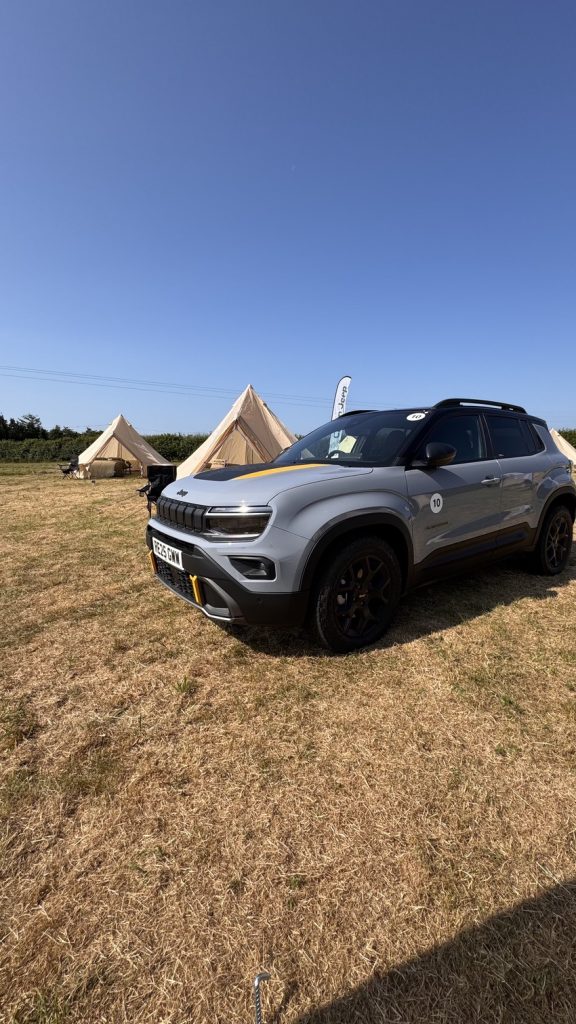
Earlier this year I joined Camp Jeep to get hands-on with the Avenger 4xe The North Face Edition, a small hybrid SUV with a big sense of adventure. Jeep and The North Face partnered to create this special version, drawing inspiration from Mont Blanc’s 4,806-metre peak, hence the limited number of cars produced.
The collaboration celebrates exploration and sustainability, combining Jeep’s off-road heritage with The North Face’s outdoor spirit. At first glance it looks tough and adventurous, finished in Storm Grey with Summit Gold accents, anti-glare bonnet decals and 17-inch black alloys. It looks built for dirt tracks, not just retail parks.
Design & cabin
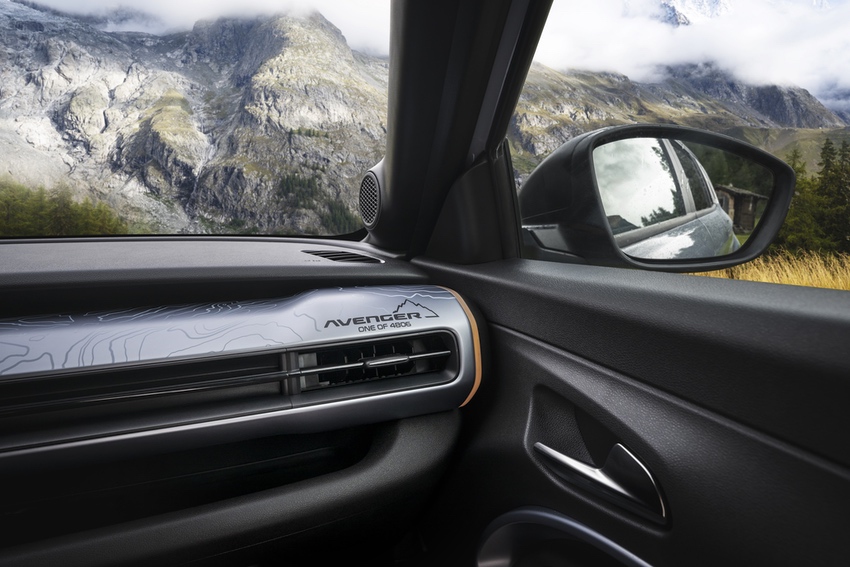
The North Face Edition stands out with rugged styling and clever detailing. There’s a black roof, roof rails, gold skid-plate accents and topographic lines across the body and dashboard.
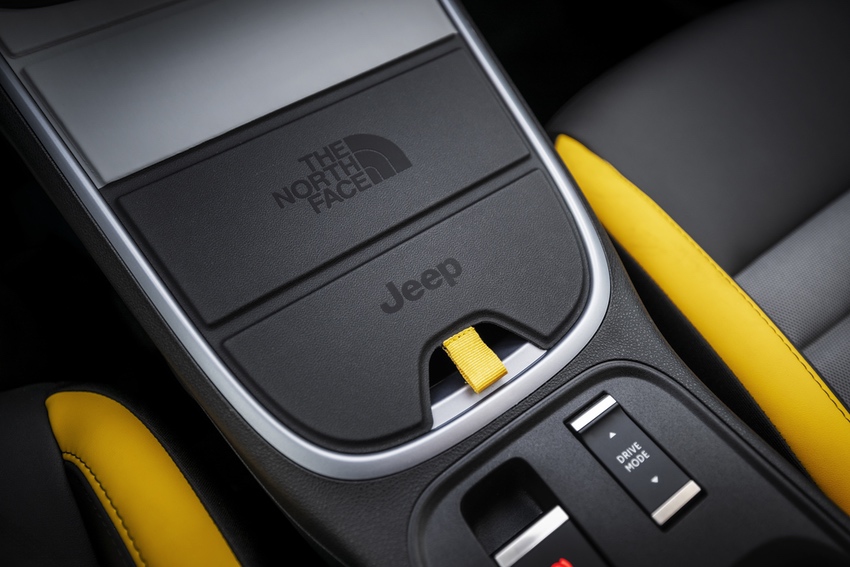
Inside, the design borrows from outdoor gear. The seats mimic puffer jackets and backpacks, complete with Summit Gold piping and elastic straps on the seatbacks. The floor mats show Mont Blanc’s profile and the dashboard carries matching topographic detailing.
It’s not luxurious, but that’s not the point. Materials are durable, the layout is clear and the digital screens are simple to read. The North Face branding adds an exclusive feel without overdoing it.
Space & practicality
The Avenger 4xe is compact but functional. The front cabin feels roomy with useful storage including a large cubby and dashboard shelf. The boot offers 325 litres with the seats up and just over 1,200 litres folded, which is plenty for weekend kit or shopping runs.
Rear space is limited for tall adults but fine for short trips. Visibility is mostly good, helped by a 360-degree camera and parking sensors. The hands-free powered tailgate makes loading easy when your hands are full.
On the road
In normal driving the hybrid system feels smooth and responsive. The electric motor on the rear axle gives a quick push off the line, making it feel nippier than its figures suggest. It cruises comfortably at motorway speeds and handles town driving with ease.
Steering is light, body control is stable and it feels secure even on twisty B-roads. The hybrid gearbox changes smoothly and the suspension deals well with rougher tarmac. Ride comfort is firm but not uncomfortable.
Off road
Off-road is where the Avenger 4xe really shines. The setup is smart: petrol engine drives the front, electric motor drives the rear. The instant electric torque helps it power through mud and gravel where front-wheel-drive SUVs would spin out.
At Camp Jeep, I took it up steep muddy climbs, through water, and across slopes on three wheels. It never faltered. The Hill Descent Control and Selec-Terrain system handled steep drops and slippery ground with confidence.
It won’t replace a Wrangler, but for its size it’s genuinely impressive. Ground clearance, wading depth and traction make it one of the most capable small 4x4s you can buy.
Range & running costs
Jeep claims 51 mpg, and I averaged close to that during mixed driving. There’s no plug-in charging to worry about, yet it still benefits from electric-only movement at low speeds. CO₂ sits around 124–126 g/km, which keeps tax reasonable.
Servicing is straightforward and running costs are low compared with traditional petrol 4x4s. The all-terrain tyres do create a little extra noise, but the trade-off is worth it for the grip they deliver off road.
Comfort & refinement
The Avenger 4xe feels stable and quiet on longer drives. The North Face seats are supportive and easy to clean, the cabin feels solid and visibility is good. There’s no auto-hold function though, which I miss in stop-start traffic.
Noise levels are well contained for a boxy car. Wind noise around the mirrors is noticeable above 60 mph, but not intrusive. Overall, it’s a relaxed drive for its size.
Tech and infotainment
The twin 10.25-inch displays cover driver info and multimedia. The infotainment system includes built-in navigation, wireless Apple CarPlay and Android Auto, plus a wireless phone charger.
It’s easy to use and clear to read. Response speed is decent, though the interface feels slightly behind the very best systems on the market. Driver aids include adaptive cruise control, blind-spot monitoring and lane-centering assist, giving confidence on longer journeys.
Trims & pricing
The North Face Edition sits above the standard 4xe trims. At around £35,000, it’s not cheap, but you get the extra styling, the outdoor-inspired interior and a limited-edition badge.
If you want the same off-road ability without the branding, the Overland version offers similar mechanicals for less money, but lacks the exclusivity and design flair that make this one special.
Rivals
Toyota Yaris Cross AWD-i and Suzuki Vitara AllGrip are its closest competitors, but neither feel as confident off road. The Subaru Crosstrek offers similar grip but less style, while the Dacia Duster 4×4 is cheaper but more basic.
The Avenger 4xe strikes a balance between everyday practicality and genuine capability, something most compact SUVs can’t match.
Who should buy or lease
Best suited for:
Drivers who want a small SUV with real 4×4 ability
Adventurous owners who mix city use with weekend escapes
Buyers who prefer hybrid convenience over plug-in complexity
Those who like distinctive, limited-edition design
Less ideal for:
Families needing lots of rear legroom or boot space
Drivers who want better electric range
Buyers seeking a plush, premium interior feel
Want to explore how much this would cost you on a business or personal lease? Check out Rivervale today for the latest deals.
Jeep Avenger 4Xe The North Face Edition
Ben Freakley
Performance: How quick it feels day to day. Power, throttle response and smoothness.
Handling: How it corners and how stable it feels on different roads.
Comfort: Ride quality, seating, refinement and road noise.
Ease of Use: How simple the cockpit is. Buttons vs touch. Clear menus. Good ergonomics.
Space and Practicality: Boot size, rear room, storage, access, visibility.
Running Costs: Real world range, charging speed, fuel use, tax, servicing.
Build Quality: Materials, fit and finish, how solid it feels inside.
Value for Money: How much car you get for the price.
Summary
The Jeep Avenger 4xe The North Face Edition is a small SUV that feels like a true Jeep. It combines compact size with proper off-road ability, stylish detailing and efficient hybrid running. It’s tough, distinctive and fun to drive.
The interior may lack polish and the absence of auto-hold is frustrating, but the Avenger’s ability to climb, wade and handle rough terrain sets it apart from most crossovers on the road.
A compact 4×4 that’s every bit as adventurous as it looks.
3.3
FAQs
Is the Jeep Avenger 4xe The North Face Edition fully electric?
No, it’s a hybrid. The front wheels are powered by a petrol engine and the rear wheels by an electric motor. It runs briefly on electric power at low speeds but doesn’t plug in
How good is it off road?
Surprisingly capable. With 210 mm of ground clearance, clever traction modes and that rear electric motor, it’ll handle steep muddy climbs, gravel trails and even shallow water crossings.
What makes The North Face Edition special?
It’s a limited-run version (only 4,806 cars) with exclusive colours, Summit Gold details, outdoor-inspired interior design and branded extras like a tent and cool bag in the boot pack.
What are the running costs like?
No charging costs, just fuel. Expect around 50 mpg, moderate insurance and straightforward servicing through Jeep dealers.
Who is it best suited to?
Drivers who like weekend adventures, live somewhere rural or coastal, or simply want a compact SUV that can handle more than a kerb.