Tag: Tesla

  • Tesla makes more changes to the Model Y for 2026

    Tesla makes more changes to the Model Y for 2026

    If you’ve been trying to keep up with the Tesla Model Y updates, you’re not alone. The UK line-up has shifted again, and the big headline for 2026 is simple.

    You now get more choice around range and equipment, without having to jump straight to the most expensive versions.

    The Model Y most people mean when they say “the updated one” is the face-lifted car often nicknamed “Juniper”. It brought the sharper look and a bunch of detail improvements aimed at comfort, refinement and efficiency. 

    Now Tesla has followed that up with further range and trim changes for UK buyers.

    What’s actually changed for 2026?

    1) There’s a new Long Range Rear-Wheel Drive version

    This sits above the entry car, offering a meaningful range boost for not a huge price leap.

    UK pricing for the Long Range Rear-Wheel Drive is £44,990. 

    2) The range is easier to understand: Standard vs Premium

    Broadly:

    • Standard is the value-focused Model Y.
    • Premium brings the plusher kit and the higher-spec set-up.

    You’ll see this reflected in pricing bands and the versions available. 

    What’s new on the “Juniper” Model Y?

    Tesla’s own intro to the updated Model Y leans heavily on three things:

    • A redesigned nose and lighting treatment influenced by newer Tesla design cues
    • Aero-focused changes (aimed at efficiency)
    • A quieter cabin, helped by acoustic glass and other tweaks (Tesla quotes big reductions in noise) 

    Inside, the “everything in the screen” approach stays, but the cabin gets a quality lift, and there’s now a rear display listed on UK specs pages for many versions. 

    And, usefully, the Model Y keeps a proper indicator stalk, which a lot of drivers will appreciate. 

    Tesla Model Y 2026 UK pricing and WLTP range

    Here’s the UK picture based on the latest reported pricing and Tesla’s published WLTP ranges.

    Standard Rear-Wheel Drive

    • Price (OTR): £41,990
    • WLTP range: 314 miles

    Long Range Rear-Wheel Drive

    • Price: £44,990
    • WLTP range: 383 miles (Tesla UK specs) 

    Premium Long Range Rear-Wheel Drive

    • Price: from £48,990
    • WLTP range: 387 miles (Tesla UK specs) 

    Premium Long Range All-Wheel Drive

    • Price: from £51,990
    • WLTP range: 372 miles (Tesla UK specs) 

    Performance

    • Price: £61,990
    • WLTP range: 360 miles (Tesla UK specs) 
    • Tesla’s Performance version also focuses on chassis changes and adaptive suspension tech. 

    Charging and efficiency highlights (UK)

    Tesla’s UK page quotes up to 250 kW Supercharging on these variants, with “miles added in 15 minutes” figures depending on model. 

    The big takeaway if you’re shopping a Model Y in 2026

    • If you want the cheapest route into a new Model Y, the Standard RWD is still the key model.
    • If you do a lot of motorway miles and want fewer charging stops, the new Long Range RWD looks like the sweet spot on paper.
    • If you care about the nicer kit and higher spec feel, you’re really looking at Premium trims.
    • If you want the wild acceleration and sportier set-up, it’s still Performance, but you pay for it.

    If you’re thinking about leasing a Tesla Model Y (2026) on a personal or business deal, it’s worth checking out Rivervale to compare the latest pricing and availability.

  • Polestar makes public charging simpler with Plug & Charge and Tesla Superchargers in one app

    Polestar makes public charging simpler with Plug & Charge and Tesla Superchargers in one app

    Polestar is giving its public charging offer in Europe a proper boost, with two changes that should make life easier for drivers: wider access to Plug & Charge, and full integration of Tesla Superchargers inside the Polestar Charge app.

    The headline numbers are big. Polestar says Plug & Charge is now available at over 28,000 compatible charging stations across Europe, and Polestar Charge gives access to more than 1 million public charging points in total, all in one app. 

    What is Plug & Charge, and why should you care?

    If you’ve ever stood in the rain juggling apps, RFID cards, and “payment failed” screens, Plug & Charge is the cure.

    In simple terms, it lets your car and the charger talk to each other automatically. You plug in, and billing is handled in the background. No extra steps. No tapping about on your phone while your passengers ask, “Is it working yet?”

    Polestar says Plug & Charge is included at no extra cost when using Polestar Charge, and it’s already available at close to 1,000 compatible charging stations in the UK, including networks such as IONITY and Allego. 

    Tesla Superchargers are now fully built into Polestar Charge

    This is the part that will grab a lot of attention.

    Polestar says it’s one of the first car makers to fully integrate Tesla Superchargers directly into its own charging app, so you can check availability and start a session without bouncing between apps. It claims access to over 20,000 Superchargers at more than 1,500 locations through Polestar Charge. 

    Even better, real-time Supercharger availability is also shown in the car’s Google Maps navigation, which should help route planning feel a lot more “set it and forget it”. 

    Which Polestar models get Plug & Charge?

    At the moment, Plug & Charge support depends on the car.

    Polestar says it’s available for Polestar 2 Model Year 2026 and Polestar 3, and will be rolled out to Polestar 4 via an over-the-air update. 

    If you’re not at a compatible Plug & Charge charger (or your car is waiting for the update), you can still start a session the usual way using the Polestar Charge app or charge card. 

    The bigger picture: one app, fewer headaches

    Polestar Charge is built to be a “one front door” for public charging across Europe, mixing big operators (like IONITY, Fastned and Tesla Superchargers) with local networks so you’re not stranded the moment you cross a border. 

    There’s also a subscription option, which Polestar says can unlock discounted fast charging across a large chunk of the network (over 80,000 charging points across 42 operators). User numbers are rising too: Polestar reported more than 45,000 users in 2025, up 30% from 2024. 

    What this means for UK drivers

    For UK Polestar owners (and anyone considering one on a salary sacrifice scheme or business contract hire), this is the sort of update that matters day-to-day.

    Not because it adds a new mode you’ll never use, but because it cuts out the boring friction:

    • Less app-hopping
    • Faster starts at the charger
    • More confidence that your planned stop will actually be available when you arrive

    And if you road trip into Europe, having one app that covers a massive roaming network can genuinely change the vibe of the journey.

  • Tesla commits to the Cybercab, and it’s a huge shift

    Tesla commits to the Cybercab, and it’s a huge shift

    Tesla has just made its clearest statement yet about where it thinks the car industry is heading.

    Not towards a bigger range of family cars, crossovers, estates and “Model Y but cheaper” spin-offs.

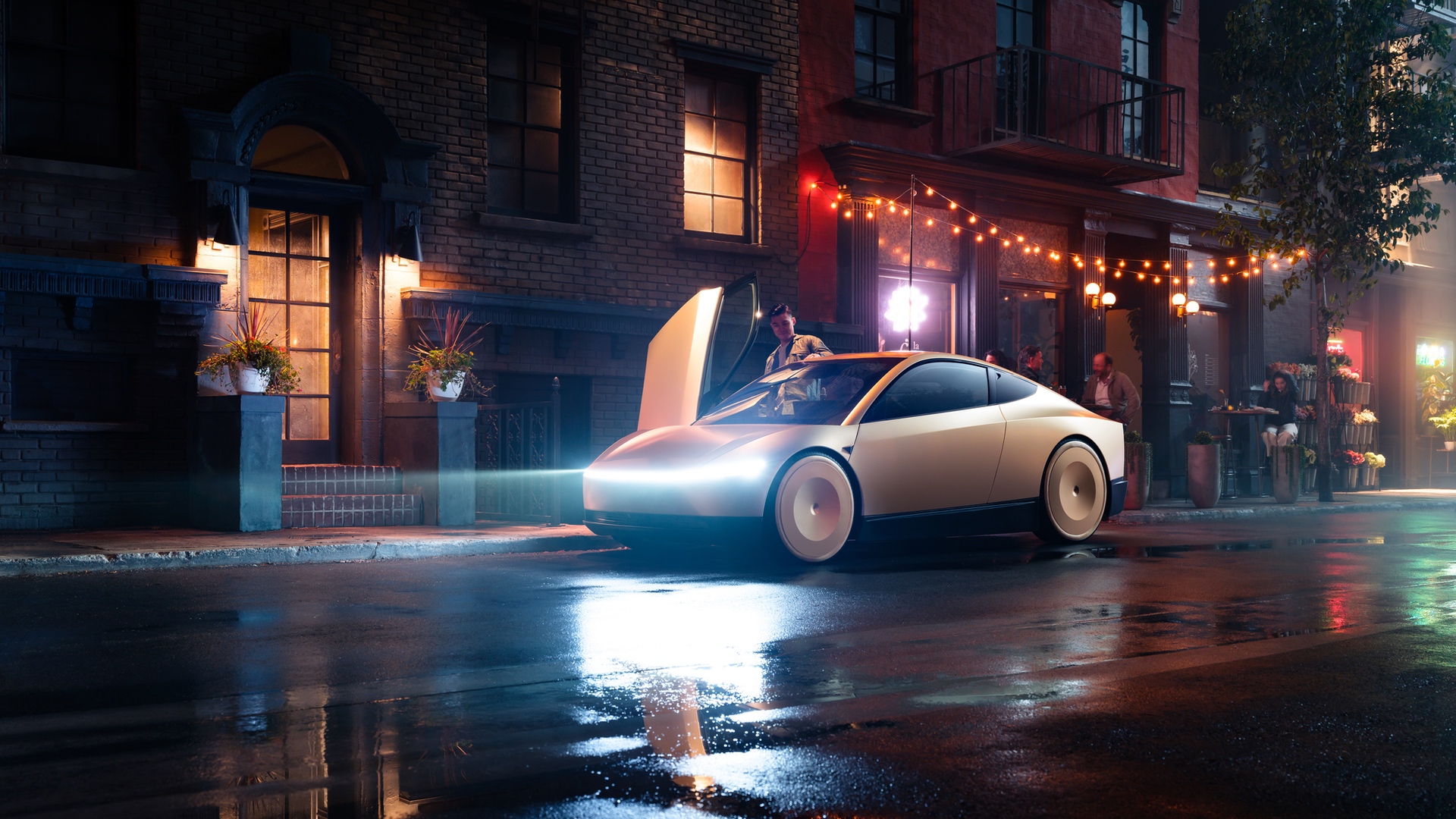
    Towards autonomy, robotaxis, and a two-seat vehicle called the Cybercab that, in its final form, is meant to run without a steering wheel or pedals. 

    That’s a bold bet at any time. It feels even bolder right now, because Tesla’s latest results show the pressure it’s under.

    The numbers behind the change in direction

    In Q4 2025, Tesla reported revenue of $24.9bn and net income of $840m, with profit down 61% year on year. 

    Tesla’s own quarterly update deck leans hard into the idea that it’s becoming a “physical AI” company, with big emphasis on autonomy and robots, not just selling cars. 

    You can feel the logic:

    • Mature EV market
    • More competition (especially on price)
    • Slower growth from just selling more cars each year

    So Tesla is trying to change the game it’s playing.

    What is the Cybercab, really?

    Think of the Cybercab less like “a new Tesla model” and more like “a tool for a service”.

    If Tesla pulls this off, the Cybercab isn’t competing with a BMW i4 or a Kia EV6. It’s competing with:

    • private car ownership
    • taxi fleets
    • ride-hailing apps
    • public transport for some trips

    In the same earnings coverage, Tesla described the Cybercab as a two-seat vehicle designed for autonomous use, and indicated production is expected in the first half of 2026. 

    That timeline matters, because Tesla also has a habit of missing dates. Even supporters will admit that.

    Why Tesla seems less interested in new “normal” cars

    For years, the obvious Tesla play felt like this:

    • refresh Model 3 and Model Y
    • add a smaller, cheaper model
    • fill out the range like every other manufacturer

    Instead, the message coming out of the latest reporting is that Tesla wants to prioritise robotaxis and robotics, even to the point of shifting factory focus away from older car lines. 

    That’s not Tesla “giving up” on selling cars. It’s Tesla saying: cars driven by people may not be the growth engine.

    If that sounds wild, it’s worth remembering what Tesla is trying to be. It wants to be the platform, not just the product.

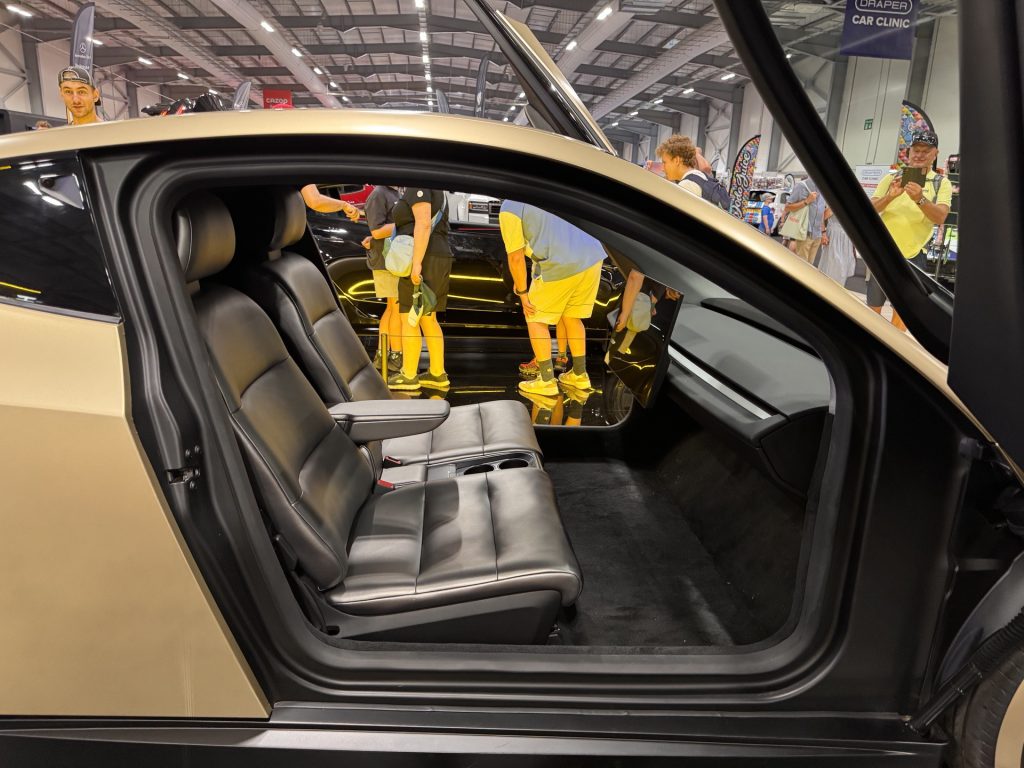
    Tesla Cybercab Inside at British Motor Show in Farnborough 2025
    Inside the Tesla Cybercab at British Motorshow, Farnborough 2025

    What this could mean for UK drivers

    1) More pressure on prices (and more focus on the models that already sell)

    Tesla has already been nudging pricing to stay sharp.

    In the UK, the new Model 3 Standard arrived with pricing around £37,990. 
    And the Model Y Standard has been positioned to cut the entry price by about £3,000, with UK pricing reported at £41,990. 

    If Tesla is not planning a wave of new retail models, it needs Model 3 and Model Y to keep doing the heavy lifting.

    That could be good news if you’re shopping for a deal. It could also mean fewer choices if you want something that feels genuinely new.

    2) A big question mark over “ownership” as the default

    Tesla’s robotaxi dream only works if a meaningful number of people stop thinking “I need to own a car” and start thinking “I need access to a car”.

    That’s a cultural shift, not just a technology shift.

    And in the UK, we’re already inching towards that world through:

    • salary sacrifice
    • subscription-style motoring
    • short-term leasing
    • ride-hailing

    Robotaxis would push it further.

    3) UK rules will shape the pace, not just Tesla

    Even if Tesla nails the tech, the UK still has to be ready for it.

    The government passed the Automated Vehicles Act 2024, and it’s been positioned as a route to getting self-driving vehicles on British roads, with talk of 2026 for early deployment. 

    At the same time, a lot of the real framework is tied to secondary legislation and a longer implementation programme heading into 2027. 

    In other words: the UK is moving, but it’s not a flick-of-a-switch moment.

    4) Robotaxis are no longer a sci-fi concept in London

    This is the bit people often miss.

    London is becoming a serious testbed for autonomy. Reporting has pointed to robotaxi players preparing for London rollouts and pilots through 2026, with the city and regulators watching closely. 

    That matters because it normalises the idea. Once the public sees it working (even in limited pilots), the conversation changes quickly.

    The big questions Tesla still has to answer

    Can it be trusted at scale?

    Tesla’s approach leans heavily on camera-based perception and software.

    The promise is simple: it either drives itself, or it doesn’t.

    Real life is messy:

    • roadworks
    • temporary signs
    • unpredictable pedestrians
    • cyclists doing cyclist things
    • British weather doing British weather things

    To win, Tesla will need not just capability, but consistency.

    Can Tesla launch a service business without upsetting people?

    A robotaxi world means:

    • fewer private purchases
    • more fleets
    • more utilisation
    • more control over pricing through a service

    That could be brilliant for Tesla’s margins.

    It also changes the relationship drivers have with the brand. You’re no longer the owner. You’re the user.

    Does the timeline feel realistic?

    Tesla has said Cybercab production is expected in the first half of 2026. 

    That’s soon.

    If it slips, the story becomes less about “Tesla leads the future” and more about “Tesla is waiting for the future”.

    My take for Ben Talks Auto

    The Cybercab is fascinating, because it’s not a “car” in the way most of us mean it.

    It’s Tesla attempting to turn mobility into software, and software into recurring revenue.

    If it works, it changes everything:

    • how cities move
    • what “a car” is for
    • what people lease, and why
    • how manufacturers make money

    If it doesn’t, Tesla risks spending years distracted while rivals keep winning the simple game: making great cars people actually want to buy.

    Right now, this feels like a fork in the road.

    Tesla’s chosen the future it wants. Now it has to prove the future wants Tesla back.