Author: Ben Freakley

  • Renault Filante. A bold new name with serious intent.

    Renault Filante. A bold new name with serious intent.

    Renault has officially revealed Filante, its new high-end crossover and the most important international model the brand has launched in years.

    This is no concept tease or naming exercise anymore. Filante is real, fully revealed, and positioned as Renault’s new global flagship outside Europe.

    Not a trim level.
    Not a market-specific spin-off.
    A clear statement of intent.

    Filante sits at the top of Renault’s international range and plays a central role in the brand’s 2027 International Game Plan. This is Renault pushing properly upmarket, with confidence.

    Renault Filante

    Filante is more than a name

    It’s a manifesto

    The name Filante was never chosen lightly, and now the full story is clear.

    It connects three key strands of Renault heritage:

    • Étoile Filante (1956), the aircraft-inspired record car that exceeded 300 km/h
    • Filante Record 2025, the electric concept that covered 1,008 km in under 10 hours at motorway speeds
    • The “étoile” badge used on Renault’s most prestigious models in the 1930s

    Together, they point to speed, efficiency, long-distance comfort and premium ambition.

    Filante is not just meant to sound aspirational. It is designed to carry meaning.

    Renault Filante Rear

    Exterior design

    Assertive, avant-garde and unmistakably premium

    Renault describes Filante as bold and charismatic, and the design backs that up.

    Key themes include:

    • A strong, sculpted stance in the E segment
    • A dramatic new light signature that gives Filante instant presence
    • Clean surfaces combined with sharp detailing
    • An aerodynamic rear designed to balance style with efficiency

    This is a long way from safe, anonymous crossover design. Filante looks confident, modern and deliberately different.

    French design flair, turned up a notch.

    Renault Filante Interior

    Interior design

    Lounge-level comfort with a high-tech edge

    Inside, Filante leans heavily into comfort, calm and refinement.

    Highlights include:

    • Lounge-style seats for every occupant
    • High levels of soundproofing for long-distance comfort
    • Customisable ambient lighting
    • A cabin designed around wellbeing rather than visual clutter

    Renault is clearly targeting customers who want space, comfort and technology without the stiffness or formality that can come with traditional premium brands.

    Renault Filante Front

    Technology and driving aids

    Smarter, calmer, more personal

    Filante introduces one of Renault’s most advanced digital environments to date.

    Key features include:

    • A fully connected, personalised infotainment system
    • Over-the-air updates
    • My Renault app integration for remote vehicle control
    • New-generation driver assistance systems

    Three safety features make their debut on a Renault:

    • Emergency steering assist
    • Smart rear-view mirror
    • Child presence detection

    The emphasis is not just on innovation, but on reducing stress behind the wheel.

    Renault Filante Race Car

    Powertrain

    Full hybrid E-Tech 250

    Renault Filante launches with an upgraded full hybrid E-Tech 250 ps powertrain.

    What we know so far:

    • New-generation hybrid system developed by the Alliance
    • Dual electric drive for smoother, more responsive performance
    • Multimode automatic gearbox
    • Designed to balance strong performance with efficiency

    This is not a plug-in hybrid and not a full EV. It’s a clear signal that Renault still sees advanced hybrids as a key part of its global strategy.

    Renault Filante Launch

    Korea first, then the world

    Filante will be built at Renault’s Busan plant in South Korea and launched there in March 2026.

    That decision is deliberate.

    South Korea has a strong appetite for premium D and E segment vehicles, and SUVs dominate the space. Filante is designed to meet local expectations while acting as a showcase for Renault’s international direction.

    From Korea, Filante will roll out to:

    • Parts of South America from late 2026
    • Gulf States in early 2027

    Europe is not currently part of the plan.

    Renault Filante Rear Seats Interior

    Why Filante matters

    This car is bigger than one model.

    Filante represents:

    • Renault’s most confident move upmarket outside Europe
    • A return to premium thinking rooted in heritage
    • A design-led, technology-forward flagship
    • A bridge between bold concept cars and real production models

    It also shows how extreme projects like Filante Record 2025 are feeding into mainstream vehicles, especially around efficiency, aerodynamics and long-distance comfort.

    Ben Talks Auto take

    Filante feels like a turning point.

    Renault has been quietly building momentum. Stronger design. Clearer identity. Better electrified tech. Filante pulls all of that together into one car.

    This is not Renault chasing German premium brands head-on. It’s Renault defining its own version of premium, one rooted in comfort, character and calm confidence.

    We still need pricing, real-world driving impressions and full specs. But on design, intent and positioning alone, Filante already feels like one of the most important Renaults of the decade.

    Not just a new crossover.
    A signal of intent.

  • DS Performance Line brings Formula E style to the road

    DS Performance Line brings Formula E style to the road

    DS Automobiles has added some genuine motorsport flair to its road car line-up with the new DS PERFORMANCE Line editions. Available on the DS 3 and the DS N°4, this special edition blends Formula E-inspired design with premium materials and strong standard spec.

    If you like your cars to look a bit different from the usual German choices, these are well worth a look.

    Formula E influence you can see and feel

    The PERFORMANCE Line takes its inspiration from DS’s Formula E programme, with satin gold and gloss black exterior details, unique badging and bespoke alloy wheels. Inside, Alcantara® features heavily, giving both cars a more sporting and upmarket feel without tipping into full performance car territory.

    It is a subtle but confident look, and very on brand for DS.

    Citroen DS 3 Perfomance Line

    DS 3 PERFORMANCE Line

    The DS 3 PERFORMANCE Line is available as a hybrid or fully electric E-TENSE. It works particularly well as a premium small car for city driving, but still feels comfortable on longer trips. Heated seats, 360-degree cameras, blind spot monitoring and keyless entry all come as standard, which is impressive for the class.

    Citroen DS 4 Performance Line

    DS N°4 PERFORMANCE Line

    The DS N°4 feels more grown-up and tech-led. It is offered as a full electric, self-charging hybrid or plug-in hybrid, which gives buyers real choice. Highlights include the DS IRIS infotainment system with integrated ChatGPT, electric seats and a strong suite of driver assistance features.

    If you are after a premium hatchback that stands out from the crowd, the N°4 deserves to be on your shortlist.

    Thinking about leasing

    Both of these PERFORMANCE Line models are well suited to leasing. You get strong specification, eye-catching design and the option to switch into the latest electric or hybrid tech without worrying about long-term ownership or resale values.

    If you are curious about monthly costs or want to compare personal and business lease options, it is worth speaking to Rivervale. They can talk you through the DS range, explain the differences between powertrains and help you find a deal that fits your budget.

    For me, this is DS at its best. Stylish, a little bit left-field, and now even more appealing if you are exploring leasing rather than buying outright.

  • BMW ALPINA becomes a standalone BMW Group brand. A new chapter begins.

    BMW ALPINA becomes a standalone BMW Group brand. A new chapter begins.

    BMW has officially launched BMW ALPINA as a standalone brand within the BMW Group umbrella, following the transfer of the Alpina trademark rights on 1 January 2026. It is a big moment. Not just for BMW, but for one of the most respected and quietly influential performance marques in automotive history. 

    Rather than chasing outright speed or lap times, BMW ALPINA is doubling down on what has always made it special. Effortless performance. Supreme comfort. And a sense of calm confidence that few performance brands can match.

    Performance, but with polish

    BMW ALPINA cars have always lived in a space of their own. Powerful engines, yes. But also beautifully judged suspension, subtle design tweaks, and cabins that feel more like a luxury lounge than a race car cockpit.

    That philosophy remains central to the new BMW ALPINA brand. The focus is on:

    • A balance of high performance and long-distance comfort
    • Distinctive driving characteristics, tuned for the real world
    • Exceptional materials, craftsmanship and acoustic refinement
    • Deep levels of personalisation, tailored to individual buyers

    These are cars built for people who appreciate engineering detail, not showmanship.

    A new wordmark rooted in heritage

    To mark this new era, BMW ALPINA has revealed a fresh wordmark. It sits centrally on the rear of the car and reinforces the brand’s standalone identity within BMW Group.

    The design is modern and understated, but deliberately inspired by Alpina’s asymmetric logo from the 1970s. It is a nice touch. A visual bridge between the brand’s past and its future, without losing the calm, restrained confidence Alpina has always stood for.

    A quick look back. How Alpina earned its reputation

    Alpina’s story starts in 1965 in Buchloe, Germany. Founder Burkard Bovensiepen began by developing tuning kits for BMW engines, initially focused on carburettors. The quality was so good that BMW honoured the factory warranty on cars fitted with Alpina parts. That was almost unheard of at the time.

    By the late 1960s and 1970s, Alpina had made a name for itself in motorsport, competing successfully in touring car racing across Europe. Over time, the brand shifted away from racing and leaned into road cars that offered something different from BMW’s own M division.

    Alpina became known for:

    • Strong but understated performance
    • Long-legged cruising ability
    • Hand-finished interiors
    • Bespoke wheels, stripes and subtle badging

    Crucially, Alpina cars have been recognised as manufacturers in their own right, complete with their own VIN numbers. That status, and the brand’s reputation among enthusiasts, is exactly why BMW has treated this transition with such care.

    Modern exclusivity, the Alpina way

    BMW says the initial phase will focus on brand activation rather than a rush of new models. That feels deliberate. Alpina buyers value continuity and confidence, not hype.

    Every BMW ALPINA will continue to be built to strict standards, with an emphasis on how the car looks, feels and sounds. The bespoke options list will remain a core part of the appeal, allowing owners to create something genuinely personal.

    This is not about chasing trends. It is about serving a very specific type of customer. Someone who wants performance without drama, luxury without excess, and individuality without shouting about it. 

    Why this matters

    In a world where performance cars are becoming louder, firmer and more aggressive, BMW ALPINA feels like a quiet act of rebellion. The move to position it as an exclusive standalone brand signals long-term commitment, not dilution.

    For enthusiasts, it should mean the values that made Alpina special are protected. For BMW, it strengthens the group’s luxury and performance offering in a way no other brand quite can.

    BMW ALPINA has never been for everyone. And that is exactly the point.

  • Europe Softens Its ICE Ban. Could the UK Be Next?

    Europe Softens Its ICE Ban. Could the UK Be Next?

    Europe has taken a major step back from a full ban on new petrol and diesel cars, reshaping the future of the electric car transition and reopening the debate around the internal combustion engine.

    In December 2025, the European Commission confirmed plans to dilute the EU’s proposed 2035 ban on new ICE car sales. Instead of a total prohibition, manufacturers will now be allowed to sell a limited number of combustion-engined vehicles beyond that date, provided strict emissions conditions are met.

    It is a landmark decision. One that could have serious implications for the UK’s own electric car strategy.

    What Has Europe Actually Changed?

    Under the original EU rules, all new cars sold from 2035 would need to be zero-emission. In practice, that meant electric or hydrogen only.

    The revised proposal changes the target from a 100 percent cut in tailpipe CO₂ emissions to 90 percent, measured against 2021 levels.

    That remaining 10 percent is crucial.

    It allows manufacturers to continue selling:

    • Petrol and diesel cars
    • Mild hybrids and full hybrids
    • Plug-in hybrids

    These vehicles can only make up a small share of total sales, around 10 percent, and manufacturers must offset the emissions through approved measures.

    Those include:

    • Use of sustainable biofuels and e-fuels
    • Low-carbon, European-produced steel
    • Credits for producing small electric cars in Europe

    There is no longer a fixed end date for ICE cars in EU law. In theory, combustion engines could remain on sale indefinitely, as long as overall fleet emissions targets are met.

    Why Did Europe Backtrack on the ICE Ban?

    Pressure has been building for years.

    Major car makers including Volkswagen, BMW, Mercedes-Benz, Renault and Stellantis lobbied hard for flexibility. National governments joined them, worried about jobs, investment and rising competition from low-cost Chinese EV brands.

    The European Commission now describes the changes as a balance between climate ambition and industrial survival.

    Its leadership has framed the move as a way to protect Europe’s car industry while still pushing electrification forward, rather than forcing an abrupt cliff-edge transition.

    Electric Cars Are Still Central to Europe’s Plan

    Despite the headlines, this is not a rejection of electric cars.

    Europe is doubling down in other areas:

    • Tighter emissions rules for large corporate fleets
    • Targets for company cars and vans to be zero-emission by 2030
    • €1.8 billion earmarked for European battery production
    • “Super credits” for small electric cars to boost affordability

    The message is clear. EVs remain the backbone of Europe’s transport future, but ICE cars are being given a longer runway.

    Where Does This Leave the UK?

    For now, the UK is sticking to its own rules.

    The current policy still bans the sale of new petrol and diesel cars from 2030, with all new cars required to be zero-emission by 2035. The ZEV mandate also forces manufacturers to sell a growing percentage of electric cars each year, rising to 28 percent in 2025.

    But Europe’s shift changes the political and commercial landscape.

    The UK car market is deeply linked to Europe. Many vehicles sold here are engineered, built and homologated for EU rules. Diverging too far creates cost, complexity and risk for manufacturers.

    There is already growing pressure on the UK government to reconsider:

    • EV adoption is rising, but slower than targets demand
    • Private buyers remain price-sensitive
    • Infrastructure confidence is still uneven
    • Some manufacturers are struggling to meet quotas

    Europe’s softer stance gives the UK political cover to review its own approach, without abandoning electric cars altogether.

    A More Realistic Transition?

    For drivers, this could be good news.

    A slower ICE phase-out keeps choice in the market, supports hybrid technology, and helps avoid price shocks as EV demand outpaces supply. It also gives charging infrastructure time to catch up with ambition.

    For manufacturers, it offers breathing space while still rewarding innovation.

    For the climate, the outcome will depend on execution. Offsetting emissions with e-fuels, cleaner materials and smarter regulation needs to deliver real-world benefits, not loopholes.

    Will the UK Follow Europe?

    Nothing has changed yet.

    But Europe’s decision makes one thing clear. The electric car transition does not have to be all or nothing.

    A more flexible, technology-neutral approach may prove more durable, more affordable, and more politically stable. If it works in Europe, it becomes harder for the UK to ignore.

    For now, electric cars remain the destination. Europe has just changed the route.

    I’ll be honest. I love electric cars.

    I’ve driven some brilliant EVs over the last few years. Quiet, smooth, quick and genuinely relaxing to live with. When they work, they really work. For many drivers, especially company car users, they already make perfect sense.

    But I also think easing the pressure to switch is the right move.

    Not everyone is ready. Not every household can charge at home. Not every buyer wants to gamble on infrastructure, resale values or fast-moving technology. Forcing the change too hard, too fast risks putting people off electric cars altogether.

    Europe’s decision feels more realistic.

    Keep pushing EVs. Keep investing in batteries, charging and affordable small electric cars. But allow hybrids and cleaner combustion engines to bridge the gap while confidence catches up with ambition.

    If the UK takes a similar approach, it wouldn’t be a step backwards.

    It would be a smarter way forward.

    Stay tuned to Ben Talks Auto for more updates as and when they’re announced and for the latest car reviews.

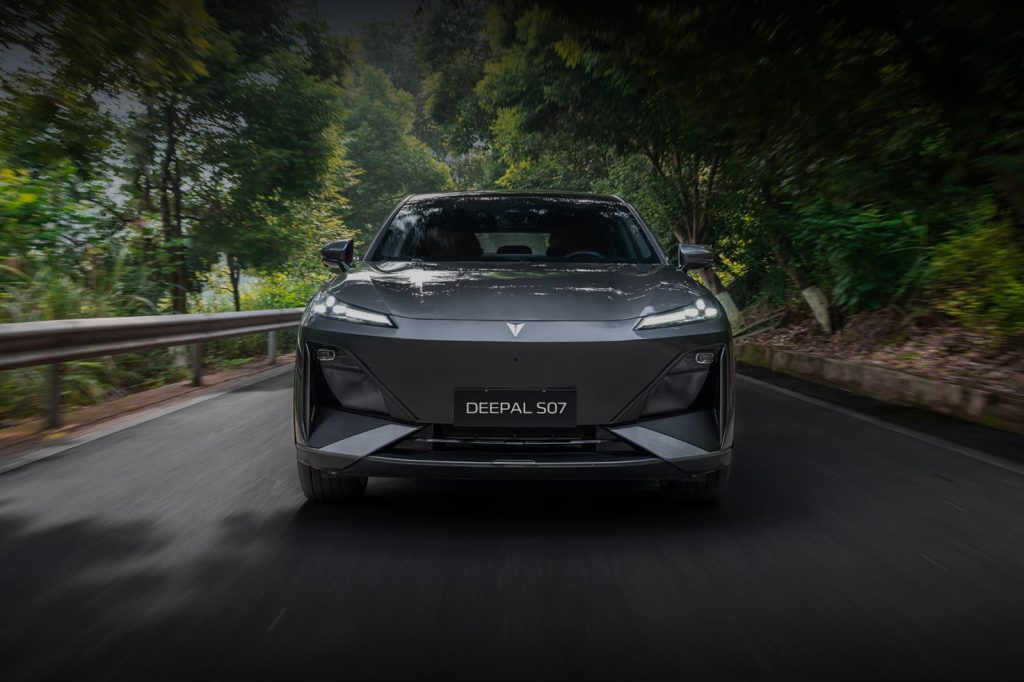
  • Changan Deepal S07 Review

    Changan Deepal S07 Review

    Comfort first, tech-led, but not one for keen drivers

    I had the Changan Deepal S07 for a few days, and it left a strong impression. Not because it thrilled me behind the wheel, but because it shows just how far Chinese EV brands have come in a short space of time. This is a car that puts comfort, tech and ease of use front and centre. If you like a relaxed drive and a calm cabin, it does a lot very well. If you love the feel of driving, this may not quite land.

    Quick facts at a glance

    • Price: £39,990 OTR
    • Battery: 79.97kWh
    • Power: 160kW (218hp)
    • Range: up to 295 miles
    • 0 to 60mph: 7.9 seconds
    • Drive: Rear wheel drive
    • Towing capacity: 1,500kg
    • Boot: 510 litres
    • Frunk: 125 litres

    First impressions and design

    I think the Deepal S07 looks smart. It has a clean, modern shape with a coupe-SUV silhouette that feels right on trend without trying too hard. The sculpted lines, fastback rear and flush door handles give it a sleek, premium feel.

    The full-width LED light bar front and rear looks great at night and gives the car a distinctive face. The star-inspired paint colours are a nice touch too. Sunset Orange and Nebula Green really stand out, while Comet White and Eclipse Black keep things more subtle.

    You also get a lot of choice without paying extra.

    • Five exterior colours
    • Three interior trims
    • 19 or 20 inch wheels

    All included as standard, which is refreshing.

    Interior and comfort

    Step inside and this is where the S07 really shines.

    The cabin feels airy, modern and well finished. Materials are soft to the touch, the design is clean, and nothing feels cheap. It punches above its price point in terms of perceived quality.

    The panoramic glass roof floods the cabin with light, and the electric sunshade keeps things comfortable on bright days. Ambient lighting and the various cabin modes make it feel more like a lounge than a traditional car interior.

    However, the seats are a mixed bag.

    They are heated and ventilated, electrically adjustable, and very comfortable at first. But they feel more like a sofa than a supportive driving seat. There is no under-thigh tilt adjustment, which I really missed. On shorter journeys they are lovely. On a long motorway run, I am not convinced they would offer enough support.

    If you value comfort over cornering confidence, you will probably love them. If you like to feel held in place, you might not.

    Technology and infotainment

    Tech is clearly a big focus here.

    The 15.6 inch rotating touchscreen is a real talking point. It can swivel towards the driver or passenger, and it looks sharp and responsive. Wireless Apple CarPlay and Android Auto are standard, which is essential these days.

    The AR head-up display replaces a traditional instrument cluster, projecting speed, navigation and safety info directly onto the windscreen. Once you get used to it, it works well and keeps your eyes up and on the road.

    Other highlights include:

    • 40W wireless phone charging
    • 14-speaker premium sound system
    • 360 degree camera with transparent chassis view
    • Multifunction rear touchscreen
    • Bluetooth phone key

    There are also loads of novelty but useful modes like nap mode, camping mode, car wash mode and even pet detection. Some will use them daily, others will try them once and smile, but it all adds to the sense of a tech-forward car.

    One downside is that some system elements are not fully localised, and parts of the adaptive cruise and menus do not yet feel completely polished for UK use.

    On the road

    This is where the S07 shows its character, and where opinions will split.

    It is very easy to drive. Steering is light, visibility is good, and everything feels calm and predictable. Around town and on the motorway it is effortless. Adaptive cruise control, lane assistance and driver aids take the stress out of longer journeys.

    But it feels floaty.

    The best way I can describe it is that it feels less like driving a car and more like steering a very good computer game. The steering is accurate, but numb. The suspension prioritises comfort, but there is a softness that removes road feel entirely.

    If you are after a driver’s car, this is not it. There is no sense of engagement or feedback. You point it where you want to go, and it goes there, quietly and competently.

    For many buyers, that will be exactly the point.

    Performance and efficiency

    With 218hp and a 0 to 60 time of 7.9 seconds, it is quick enough for everyday driving. It never feels slow, but it never feels sporty either.

    The claimed 295 mile range is competitive for the class, and the large battery should make it a strong long-distance cruiser, especially with its comfortable ride and quiet cabin.

    This feels like a car designed to make EV ownership easy, not exciting.

    Space and practicality

    The S07 is a big car, and it uses its space well.

    • Rear legroom is generous thanks to the long wheelbase
    • The boot is a useful 510 litres
    • The frunk adds another 125 litres
    • Rear seats fold 60:40

    It would work well for families, company car drivers, or anyone needing space without stepping up to something huge.

    Safety and driver assistance

    Safety tech is comprehensive.

    You get front collision warning, emergency braking, lane keeping, blind spot monitoring, rear cross traffic alert and more. Parking is made easy with the 360 degree camera and parking aids.

    It all works quietly in the background and adds to the relaxed driving experience.

    Rivals

    The obvious competitors are the Hyundai Ioniq 5 and Tesla Model Y.

    Compared to those, the Deepal S07 feels:

    • More comfort-focused than the Ioniq 5
    • Less engaging but more lounge-like than the Model Y
    • Very strong on standard equipment for the price

    It may not have the brand recognition yet, but on paper and in the cabin, it absolutely belongs in the conversation.

    Changan Deepal S07

    Ben Freakley

    Performance: How quick it feels day to day. Power, throttle response and smoothness.
    Handling: How it corners and how stable it feels on different roads.
    Comfort: Ride quality, seating, refinement and road noise.
    Tech and Infotainment: Screens, CarPlay, clarity, speed, app controls, driver aids.
    Ease of Use: How simple the cockpit is. Buttons vs touch. Clear menus. Good ergonomics.
    Space and Practicality: Boot size, rear room, storage, access, visibility.
    Running Costs: Real world range, charging speed, fuel use, tax, servicing.
    Build Quality: Materials, fit and finish, how solid it feels inside.
    Value for Money: How much car you get for the price.

    Summary

    The Changan Deepal S07 is a comfortable, tech-packed electric SUV that makes a strong case for itself. It looks good, it feels premium inside, it is easy and relaxing to drive.

    But it is not a car for people who love driving. If you want feedback, engagement and involvement, you will probably find it a bit detached. If you want a calm, comfortable, well-equipped EV that feels like a mobile living room, this could be right up your street.

    It is a clear sign that brands like Changan are not just catching up, they are setting their own agenda.

    3.8

    FAQ’s

    Is the Changan Deepal S07 available in the UK?

    The Deepal S07 has been shown and driven in the UK, but full sales availability and dealer rollout are still to be confirmed.

    What is the real-world range of the Changan Deepal S07?

    The official range is up to 295 miles. In mixed driving, a real-world range closer to 240 to 260 miles is realistic, depending on speed, temperature and driving style.

    How fast is the Changan Deepal S07?

    The Deepal S07 produces 218hp and can accelerate from 0 to 60mph in around 7.9 seconds. It feels smooth and responsive rather than sporty.

    Is the Changan Deepal S07 fun to drive?

    The S07 is very easy and relaxing to drive, but it is not aimed at keen drivers. The steering and suspension prioritise comfort over engagement, so it can feel floaty on the road.

    How comfortable is the Deepal S07 on long journeys?

    The ride is soft and quiet, which suits motorway driving well. The seats are comfortable but lack under-thigh support, which may affect comfort on longer trips for some drivers.

    What technology does the Deepal S07 come with as standard?

    Standard equipment includes a 15.6 inch rotating touchscreen, AR head-up display, wireless Apple CarPlay and Android Auto, 360 degree camera, wireless phone charging and a premium sound system.

    How practical is the Changan Deepal S07?

    It offers a 510 litre boot, a 125 litre front boot, good rear legroom and a 60:40 folding rear seat, making it suitable for families and everyday use.

    How does the Deepal S07 compare to the Tesla Model Y?

    The Deepal S07 focuses more on comfort and interior quality, while the Model Y feels firmer and more performance-oriented. The S07 also includes more features as standard.

    How much does the Changan Deepal S07 cost?

    At £39,990 on the road, the S07 offers a high level of standard equipment with no extra cost for colours, wheels or interior trims, making it competitive against established electric SUV rivals and as of December 2025, is available for as little as £339 per month on a personal lease at Rivervale.

  • Porsche Unveils the 911 GT3 90 F. A. Porsche. A Limited Edition Worthy of the Name

    Porsche Unveils the 911 GT3 90 F. A. Porsche. A Limited Edition Worthy of the Name

    Porsche has revealed one of the most meaningful limited edition models it has created in recent years. The 911 GT3 90 F. A. Porsche is a 90-unit collector’s car built to mark what would have been the 90th birthday of Ferdinand Alexander Porsche, the man whose design philosophy helped shape the original 911.

    This is not a badge-and-paint special. It is a deeply personal tribute, created through Porsche Sonderwunsch, and rooted in real history, family involvement, and timeless design principles.

    Only 90 examples will be built worldwide. One has already been purchased by F. A. Porsche’s son, Mark Porsche.

    A GT3 Touring with purist appeal

    At its core, this limited edition Porsche is based on the 911 GT3 with Touring Package. That means a cleaner look, an extendable rear spoiler instead of a fixed wing, and a more understated presence that suits the car’s commemorative purpose.

    Power comes from the naturally aspirated 4.0-litre flat-six, producing 510PS and 450Nm. In an era where engines like this are disappearing fast, it feels entirely fitting that such a special edition relies on one of Porsche’s purest powerplants.

    This is still very much a GT3. Just one with a quieter confidence.

    F. A. Greenmetallic and heritage details

    The exterior is finished in F. A. Greenmetallic, a bespoke colour created specifically for this model. It is inspired by the Oak Green Metallic shade worn by F. A. Porsche’s own 911 in the 1980s, and it suits the car beautifully.

    Other details underline the heritage theme without shouting about it:

    • Sport Classic wheels inspired by classic Fuchs rims
    • Satin-gloss black wheel finish with centre-locking hubs
    • Historic Porsche crest on the wheel centres
    • A gold-plated “90 F. A. Porsche” badge on the front grille

    It is subtle. Elegant. Very Porsche.

    An interior driven by memory

    Inside, this limited edition Porsche becomes something genuinely special.

    The cabin combines Truffle Brown Club LeatherChalk Beige stitching, and a bespoke F. A. Grid-Weave fabric used on the seat centres, glovebox, luggage mat, and accessories. The fabric pattern is inspired by jackets worn by Ferdinand Alexander Porsche himself, a detail recalled by his son Mark as part of childhood memories.

    Other highlights include:

    • An open-pore walnut gear knob engraved with F. A. Porsche’s signature
    • A bespoke Sport Chrono clock inspired by his personal Chronograph I
    • Gold-plated plaques identifying each car as “One of 90”

    Nothing here feels random. Every detail has a reason to exist.

    More than just a limited edition car

    Ownership goes well beyond the car itself.

    Each buyer receives an exclusive Porsche Design Chronograph 1, created specifically for the 911 GT3 90 F. A. Porsche. It features aged-style luminous detailing, F. A. Porsche’s initials on the dial, and a rotor inspired by the car’s wheels. Each watch is individually numbered and hand-built in Switzerland.

    There is also a bespoke leather weekender bag, trimmed in matching materials to the interior, and even a revived Porsche Junior sled. Originally designed by F. A. Porsche in the 1960s, the modern version is made from carbon fibre, finished in F. A. Greenmetallic, and limited to 90 units.

    It is classic Porsche thinking. Serious engineering, with a sense of humour and humanity.

    A personal reflection

    As someone who cares just as much about the stories behind cars as how they drive, this one really struck a chord. The details feel personal rather than showy, and that is what makes it special. It is a reminder that Porsche still knows how to celebrate its heritage properly, without losing sight of what makes a great 911 in the first place.

    When can you buy the 911 GT3 90 F. A. Porsche?

    Orders open in April 2026, with production beginning in the second half of the year once buyers have completed their final configurations through Porsche Sonderwunsch.

    Pricing has not yet been confirmed, but this will sit firmly in serious limited edition Porsche collector territory. Expect demand to far exceed supply.

    Final thoughts

    The 911 GT3 90 F. A. Porsche is not about performance headlines or lap times. It is about values. Reduction to the essentials. Form following function. Design that lasts.

    In a world full of limited editions that feel forgettable, this is one that genuinely earns its place.

    And that makes it a Porsche worth celebrating.

  • Vauxhall Reveals the New Astra and Astra Sports Tourer for 2026

    Vauxhall Reveals the New Astra and Astra Sports Tourer for 2026

    Vauxhall has pulled the covers off the new Astra and Astra Sports Tourer, and both models promise a proper step forward for design, comfort and electrification. The 2026 line up gets a sharper look, smarter tech and a more sustainable cabin. There’s also a big upgrade for the Astra Electric, which now claims up to 282 miles of range. 

    Both cars will make their public debut at the Brussels Motor Show in January, but here’s a first look at what you can expect.

    2026 Vauxhall Astra Illuminated Front Grille and Griffin Badge

    Sharper design and the first illuminated Griffin badge

    The Astra has adopted the newer Vauxhall Vizor face, bringing it in line with the Mokka, Frontera and Grandland. The grille is slimmer and more technical, taking inspiration from the Corsa GSE Vision Gran Turismo concept. The big story is the illuminated Griffin badge, which appears on the Astra for the first time. It sits at the centre of a compass-style lighting signature, a detail first teased on the 2023 Experimental Concept. 

    New alloy designs and fresh colours like Contour White and Clover Green round off the update.

    2026 Vauxhall Astra 5 Door Hatchback

    Smarter headlights with over 50,000 elements

    Vauxhall is giving Astra buyers serious lighting tech. The Intelli-Lux HD headlights, usually found on higher-end models, are now available here. Each unit has more than 50,000 micro-LED elements that react faster and more precisely than previous matrix systems. The lights can cut out oncoming traffic, adjust intensity in rain and fog, and even dim themselves around reflective road signs. 

    2026 Vauxhall Astra Interior

    Comfort upgrade: Intelli-Seats now standard

    Inside, Vauxhall has focused on comfort. The new Intelli-Seats come as standard across every trim and feature a recessed channel inspired by road bike saddles to relieve pressure on the tailbone. Long drives should feel easier on the body. 

    Higher trims also offer AGR-certified seats with recycled ReNewKnit covers, heating, massage and memory functions.

    The cabin is cleaner and more intuitive too, following the same layout direction as the latest Grandland.

    Astra Electric: more range and new V2L tech

    The electric Astra now moves up to a 58kWh battery. Official WLTP range increases to 282 miles, around 22 miles more than before. It also gains Vehicle-to-Load capability. Handy if you want to charge an e-bike or power camping kit directly from the car. 

    Boot space remains strong. The hatchback offers up to 1,339 litres with the seats folded. The Sports Tourer stretches to 1,634 litres and includes flexible 40:20:40 rear folding.

    2026 Vauxhall Astra Alloy Wheel

    Powertrains for all needs

    Buyers won’t be short on choice. The updated Astra range includes:

    • Fully electric
    • 48V hybrid
    • Plug-in hybrid
    • Petrol

    Vauxhall says this broad mix is designed to suit every type of driver. 

    2026 Vauxhall Astra Sports Tourer Estate

    What this means for UK buyers

    The Astra has always been a core part of Vauxhall’s line up, and this update helps it stay relevant in a crowded segment. The illuminated badge gives it presence. The upgraded seats improve everyday comfort. The extended EV range and V2L help it compete with newer rivals.

    We’ll know more about specs, trims and UK pricing when the car makes its world premiere in Brussels in January 2026.

  • Renault and Ford Team Up to Build Two New Affordable Electric Cars for Europe

    Renault and Ford Team Up to Build Two New Affordable Electric Cars for Europe

    Renault Group and Ford have announced a major new partnership that will reshape the electric car market in Europe. The two brands will work together on a pair of affordable Ford-branded electric cars, both using Renault’s Ampere platform. Production will take place in northern France, with the first model planned for early 2028.

    This is one of the most significant alliances we’ve seen in Europe’s EV market for years. It brings together Renault’s fast-growing electric know-how with Ford’s design strengths and driving feel. For buyers, it should mean better value, more choice and genuinely competitive electric cars that don’t cost the earth.

    What the partnership means

    The agreement covers two main areas:

    Two new Ford electric cars built by Renault

    Ford will design the vehicles, but underneath they will use Renault’s Ampere platform. This is the same EV architecture helping Renault roll out more efficient, lower-cost electric models. The cars will be developed jointly, built by Renault in France and given a full Ford identity in terms of handling, tech and interior feel.

    The first car is expected to reach European showrooms in early 2028 and marks the start of a fresh product push for Ford in the region.

    Could this mean the return of the Fiesta?

    Ford hasn’t confirmed what the two new electric models will be, but the timing has already sparked plenty of speculation. With the Fiesta bowing out in 2023 and leaving a huge gap in Ford’s small-car range, many buyers are wondering whether this partnership could pave the way for an electric revival of one of Britain’s best-loved cars.

    An affordable EV built on Renault’s Ampere platform could be the perfect foundation for a modern, compact Ford. Nothing is announced yet, but if the brand wants to reconnect with the millions of drivers who grew up with a Fiesta, this partnership might be the moment to do it.

    Planned collaboration on vans

    Alongside the passenger cars, Renault and Ford have signed a Letter of Intent to explore a shared approach to selected light commercial vehicles. If it goes ahead, both brands could co-develop and manufacture certain vans for the European market. Given how strong both companies are in this segment, this could become a big deal for fleets and small businesses looking to go electric.

    Why this matters

    Europe’s EV market is becoming more competitive by the week. Manufacturers are under pressure to cut costs, reduce complexity and speed up development. This partnership gives both companies what they need:

    • Renault gains extra scale for its Ampere platform and its ElectriCity production hub in northern France.
    • Ford gains access to proven EV underpinnings while focusing on its strengths in design, driving character and customer experience.

    Both CEOs were clear that this alliance is about staying competitive in a fast-shifting industry. Renault’s François Provost described Ford as “an iconic car manufacturer”, while Ford’s Jim Farley said combining forces would help them build “fun, capable, and distinctly Ford” electric cars.

    What buyers should expect

    While details about the two electric cars are still under wraps, a few things are already clear:

    • Expect affordable pricing, as both brands want these models to hit the mass market.
    • The cars will carry Ford’s design language and driving feel, not a rebadged Renault.
    • The Ampere platform should allow for good efficiency, competitive range and fast-charging capability.
    • Production in France helps reduce supply chain pressures and means shorter transport distances for European customers.

    If this partnership delivers on its aims, these two EVs could become important alternatives to the growing number of Chinese-built electric cars arriving in Europe.

    A smarter way of working

    What stands out about this deal is how open both companies are to pooling resources. Legacy manufacturers are often slow to collaborate, but Renault and Ford clearly see value in teaming up where it makes sense. It also shows how flexible modern EV platforms have become, letting completely different brands create their own identity on top of shared foundations.

    This is just the starting point. If the two passenger cars are successful, and if the van collaboration moves forward, we could see a much wider Renault–Ford partnership in the future.

    Final thoughts

    For European buyers, this is promising news. More choice, better value and the chance to buy a Ford EV built using one of the most competitive electric platforms on the continent.

    As soon as more details surface on the new models, I’ll cover them here on Ben Talks Auto. If Ford gets the pricing and design right, these cars could become some of the most important electric models of the late 2020s.

  • Be Among the First to Drive the Polestar 5… in Gran Turismo 7

    Be Among the First to Drive the Polestar 5… in Gran Turismo 7

    Polestar is giving UK drivers an early chance to experience the new Polestar 5, but not on the road. It’s arriving first in Gran Turismo 7. From December to early February, Gran Turismo simulators will land in selected Polestar Spaces across the country. Anyone can drop in, set a lap time and try to climb a nationwide leaderboard.

    The quickest drivers from each Space will go through to a live final at Polestar Battersea in February. The winner gets an all-expenses paid trip to Sweden and a road trip in the new Polestar 5.

    Where you can take part

    • Polestar Sheffield: 11 Dec 2025 to 7 Jan 2026
    • Polestar Cribbs Causeway: 11 Dec 2025 to 7 Jan 2026
    • Polestar Solihull: 9 Jan to 3 Feb 2026
    • Polestar Battersea: 8 Jan to 3 Feb 2026

    No booking needed. Just turn up and drive.

    Built to feel like the real Polestar 5

    Polestar and Polyphony Digital worked closely to model the Polestar 5 with as much accuracy as possible. Professional racer Igor Fraga tested prototype cars in Sweden and helped fine-tune the virtual handling at Brands Hatch. The aim was to make the digital Polestar 5 behave like the one launching next year.

    The grand final

    Fastest drivers from each Space will be invited to a live showdown in London. The overall UK Champion 2026 wins a holiday to Sweden for up to four people, including time behind the wheel of the real Polestar 5.

    More details will follow in January.

    If you can’t visit a Polestar Space, you can join the action on Gran Turismo 7. A worldwide time trial on the virtual Brands Hatch circuit is open to all players. The winner receives a trip to Japan for the 2025 GT World Series World Finals.


    I’ll admit I’m hopeless at computer games, but this has still tempted me. It sounds like a great bit of fun and the prize is incredible. A road trip across Sweden in the new Polestar 5 is something I’d love to experience. I might have to take a trip up to Battersea and give it a go. If you beat my lap time, feel free to brag.

  • Ford BlueCruise Expands Rollout on Puma, Kuga and Ranger PHEV

    Ford BlueCruise Expands Rollout on Puma, Kuga and Ranger PHEV

    Ford is widening access to its hands-free driving tech, confirming that BlueCruise will soon be available on four more models across Europe, including key UK favourites. From spring 2026, buyers of the Ford Puma, Puma Gen-E, Kuga and Ranger Plug-In Hybrid will be able to specify the system when choosing the Driver Assistance Pack.

    This marks the biggest step yet in Ford’s push to make hands-free motoring more mainstream. BlueCruise was the first hands-off, eyes-on system to be approved for use in Europe back in 2023, starting with Great Britain. Since then, it has expanded to 16 markets and now covers more than 135,000 km of approved motorways known as Blue Zones.

    What UK drivers can expect

    BlueCruise allows hands-free driving on approved motorways, as long as the car can detect clear lane markings and the driver continues to look at the road. A driver-facing camera monitors head position and eye gaze, even when wearing sunglasses, to make sure attention stays on the motorway ahead.

    The system controls speed, braking, steering and lane positioning, taking a lot of strain out of long motorway runs. Think of it as an extension of Intelligent Adaptive Cruise Control, with the added ability to let go of the wheel when conditions are right.

    For UK buyers, the big news is availability on high-demand models. The Ford Puma is consistently one of Britain’s best-selling cars, and the new electric Puma Gen-E is expected to follow suit. Adding BlueCruise to these cars makes the technology far more accessible than before, when it was limited to the Mustang Mach-E.

    The Kuga Hybrid and Kuga Plug-In Hybrid will also benefit, giving family buyers the option of hands-free motorway driving. For business users, the Ranger Plug-In Hybrid gaining BlueCruise could make long-distance commercial travel less tiring.

    A global roll-out with real-world mileage behind it

    Ford says more than one million BlueCruise-equipped vehicles are already on the road around the world, covering over 888 million kilometres of hands-free driving so far. That real-world mileage helps reinforce confidence as the tech expands into more markets and models.

    With Blue Zones now stretching across much of Europe, Ford even quotes a hands-free journey example from Stockholm to Rome. While UK drivers are unlikely to attempt that route, it helps show how widespread the infrastructure has become.

    When can you get it?

    BlueCruise for Puma, Puma Gen-E, Kuga and Ranger PHEV will be available from spring 2026 on new model year vehicles fitted with the Driver Assistance Pack. Ford will confirm subscription options and pricing closer to launch.

    UK Blue Zones remain limited to motorways in Great Britain, with Northern Ireland not currently approved. But for most UK drivers, this expansion still means far greater access to the technology.

    Want to know more?

    You can read Ford’s overview of BlueCruise technology here:
    https://www.ford.co.uk/technology/driving-assistance/ford-bluecruise

    And if you’re researching the Puma in more depth, you can check out all the details, along with lease deals: https://www.rivervale.co.uk/car/leasing/ford/puma