
Toyota has officially revealed the ninth-generation Hilux, set to go into production in spring 2026, with UK sales starting that summer. The announcement marks a new chapter for one of the world’s most famous pick-ups, bringing electrification, advanced tech, and a tougher design while staying true to its roots.

As a long-time pickup fan, I’m genuinely looking forward to this one. I owned a 2018 Nissan Navara and haven’t driven a Hilux since around 2010, so I’m curious to see how far it’s come. Having tested the last three generations of the Ford Ranger, along with the MAXUS T60 Max and the all-electric MAXUS T90 & MAXUS eTerron 9, the Hilux’s move into hybrid and electric territory really catches my attention, especially the hydrogen-powered version planned for 2028.

What’s New for 2026
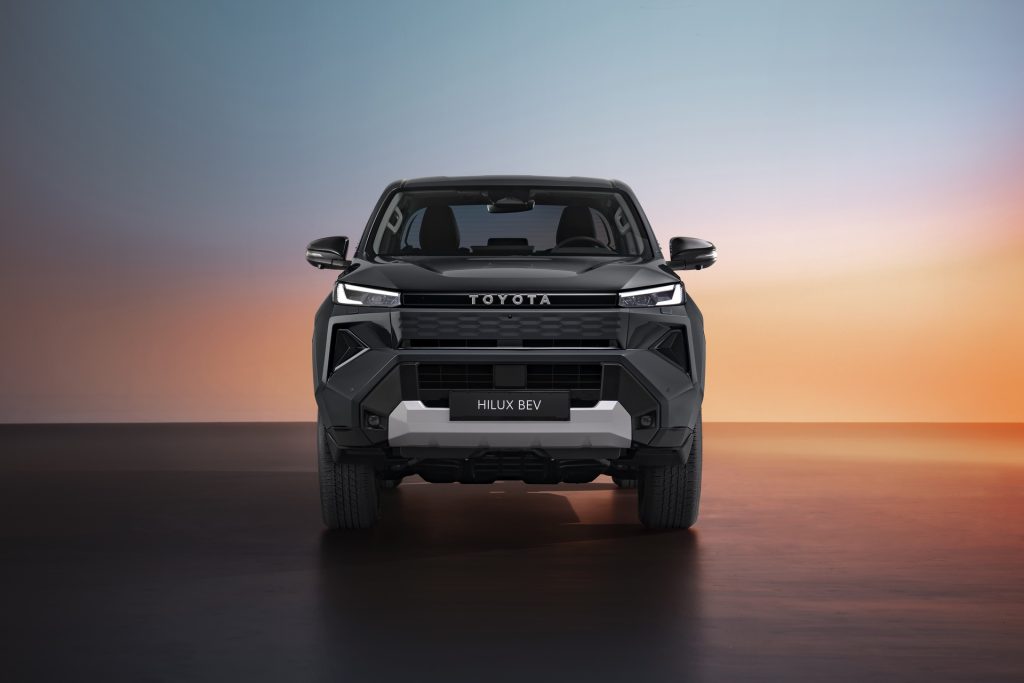
The new Hilux followToyota reveals the ninth-generation Hilux, arriving in 2026 with diesel, electric, and hydrogen powertrains. A new era for one of the world’s toughest pickups.s Toyota’s “multipath” approach, giving buyers a choice of powertrains:
- A 2.8-litre diesel mild hybrid (48V) for strong towing and off-road ability
- A fully electric Hilux BEV, offering around 150 miles of range
- A hydrogen fuel cell Hilux, confirmed for 2028 production
All versions will use a Double Cab body, feature electric power steering, all-wheel drive, and a cabin inspired by the latest Land Cruiser with a large digital display and improved materials. Toyota says payload remains close to a tonne and towing capacity up to 3,500kg, depending on the version.
A Legend Evolved
Since the first Hilux launched back in 1968, it has built a reputation for being practically indestructible. From Arctic expeditions to Top Gear torture tests, it’s one of the few pickups left in the UK market as others have disappeared. Now, it’s entering a new era with electrification but still sticking to its rugged, body-on-frame construction.

Why It Matters
With pickups like the Amarok, Ranger, and T60 continuing to evolve, Toyota’s decision to electrify the Hilux keeps it firmly in the running for fleet and lifestyle buyers alike. The electric model, in particular, will appeal to businesses wanting zero-emission capability without compromising off-road toughness.
As someone who’s spent plenty of time around commercial vehicles and pickups, I can’t wait to see how it stacks up in real-world use, and I’ll definitely be trying to get behind the wheel when it lands in the UK.


