Tesla has just made its clearest statement yet about where it thinks the car industry is heading.
Not towards a bigger range of family cars, crossovers, estates and “Model Y but cheaper” spin-offs.
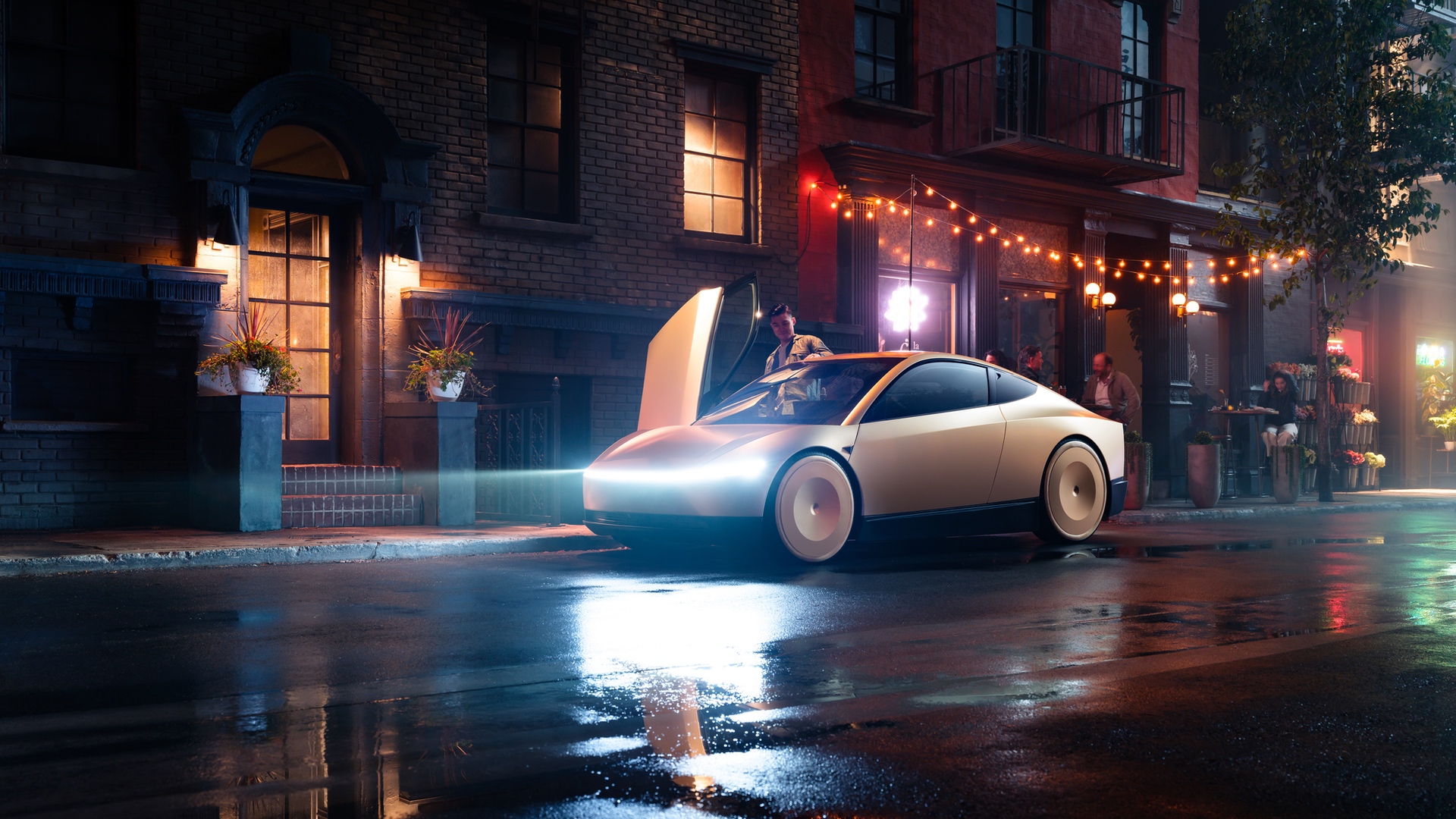
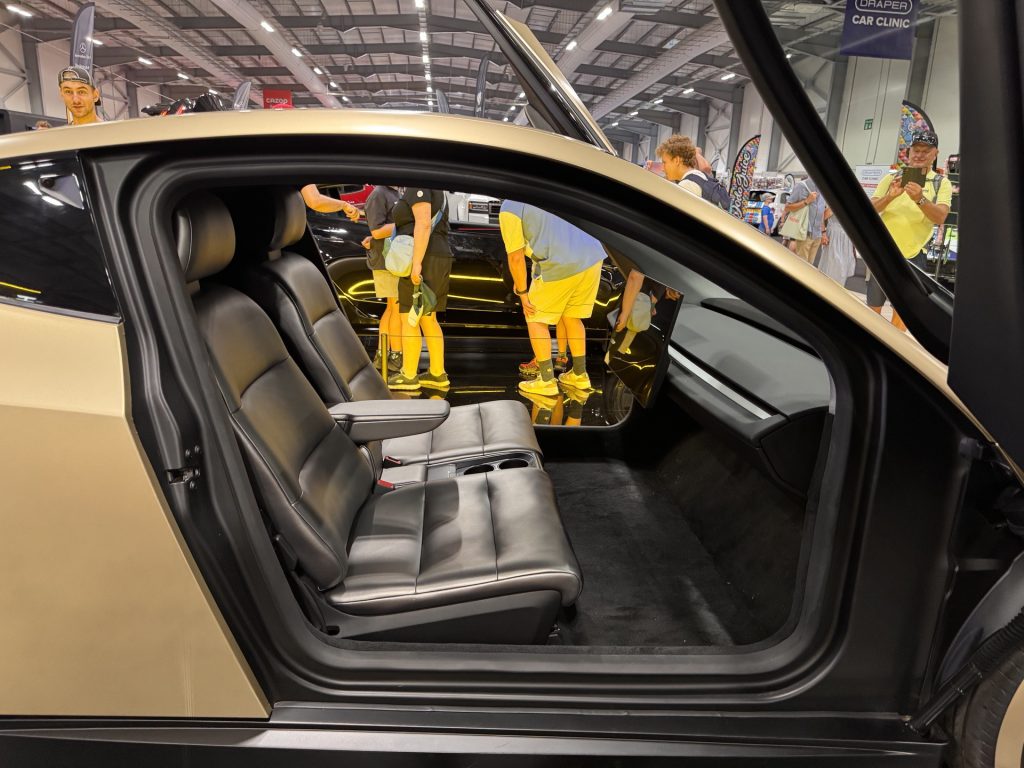
Towards autonomy, robotaxis, and a two-seat vehicle called the Cybercab that, in its final form, is meant to run without a steering wheel or pedals.
That’s a bold bet at any time. It feels even bolder right now, because Tesla’s latest results show the pressure it’s under.
The numbers behind the change in direction
In Q4 2025, Tesla reported revenue of $24.9bn and net income of $840m, with profit down 61% year on year.
Tesla’s own quarterly update deck leans hard into the idea that it’s becoming a “physical AI” company, with big emphasis on autonomy and robots, not just selling cars.
You can feel the logic:
- Mature EV market
- More competition (especially on price)
- Slower growth from just selling more cars each year
So Tesla is trying to change the game it’s playing.
What is the Cybercab, really?
Think of the Cybercab less like “a new Tesla model” and more like “a tool for a service”.
If Tesla pulls this off, the Cybercab isn’t competing with a BMW i4 or a Kia EV6. It’s competing with:
- private car ownership
- taxi fleets
- ride-hailing apps
- public transport for some trips
In the same earnings coverage, Tesla described the Cybercab as a two-seat vehicle designed for autonomous use, and indicated production is expected in the first half of 2026.
That timeline matters, because Tesla also has a habit of missing dates. Even supporters will admit that.
Why Tesla seems less interested in new “normal” cars
For years, the obvious Tesla play felt like this:
- refresh Model 3 and Model Y
- add a smaller, cheaper model
- fill out the range like every other manufacturer
Instead, the message coming out of the latest reporting is that Tesla wants to prioritise robotaxis and robotics, even to the point of shifting factory focus away from older car lines.
That’s not Tesla “giving up” on selling cars. It’s Tesla saying: cars driven by people may not be the growth engine.
If that sounds wild, it’s worth remembering what Tesla is trying to be. It wants to be the platform, not just the product.
What this could mean for UK drivers
1) More pressure on prices (and more focus on the models that already sell)
Tesla has already been nudging pricing to stay sharp.
In the UK, the new Model 3 Standard arrived with pricing around £37,990.
And the Model Y Standard has been positioned to cut the entry price by about £3,000, with UK pricing reported at £41,990.
If Tesla is not planning a wave of new retail models, it needs Model 3 and Model Y to keep doing the heavy lifting.
That could be good news if you’re shopping for a deal. It could also mean fewer choices if you want something that feels genuinely new.
2) A big question mark over “ownership” as the default
Tesla’s robotaxi dream only works if a meaningful number of people stop thinking “I need to own a car” and start thinking “I need access to a car”.
That’s a cultural shift, not just a technology shift.
And in the UK, we’re already inching towards that world through:
- salary sacrifice
- subscription-style motoring
- short-term leasing
- ride-hailing
Robotaxis would push it further.
3) UK rules will shape the pace, not just Tesla
Even if Tesla nails the tech, the UK still has to be ready for it.
The government passed the Automated Vehicles Act 2024, and it’s been positioned as a route to getting self-driving vehicles on British roads, with talk of 2026 for early deployment.
At the same time, a lot of the real framework is tied to secondary legislation and a longer implementation programme heading into 2027.
In other words: the UK is moving, but it’s not a flick-of-a-switch moment.
4) Robotaxis are no longer a sci-fi concept in London
This is the bit people often miss.
London is becoming a serious testbed for autonomy. Reporting has pointed to robotaxi players preparing for London rollouts and pilots through 2026, with the city and regulators watching closely.
That matters because it normalises the idea. Once the public sees it working (even in limited pilots), the conversation changes quickly.
The big questions Tesla still has to answer
Can it be trusted at scale?
Tesla’s approach leans heavily on camera-based perception and software.
The promise is simple: it either drives itself, or it doesn’t.
Real life is messy:
- roadworks
- temporary signs
- unpredictable pedestrians
- cyclists doing cyclist things
- British weather doing British weather things
To win, Tesla will need not just capability, but consistency.
Can Tesla launch a service business without upsetting people?
A robotaxi world means:
- fewer private purchases
- more fleets
- more utilisation
- more control over pricing through a service
That could be brilliant for Tesla’s margins.
It also changes the relationship drivers have with the brand. You’re no longer the owner. You’re the user.
Does the timeline feel realistic?
Tesla has said Cybercab production is expected in the first half of 2026.
That’s soon.
If it slips, the story becomes less about “Tesla leads the future” and more about “Tesla is waiting for the future”.
My take for Ben Talks Auto
The Cybercab is fascinating, because it’s not a “car” in the way most of us mean it.
It’s Tesla attempting to turn mobility into software, and software into recurring revenue.
If it works, it changes everything:
- how cities move
- what “a car” is for
- what people lease, and why
- how manufacturers make money
If it doesn’t, Tesla risks spending years distracted while rivals keep winning the simple game: making great cars people actually want to buy.
Right now, this feels like a fork in the road.
Tesla’s chosen the future it wants. Now it has to prove the future wants Tesla back.


